


RFID vs Barcode Tracking for Surgical Sets: Which Pays Off Faster?
Tracking surgical sets is a critical part of every hospital’s workflow. Every tray has to be complete, clean, and ready to use without delay. If something is missing or tracked poorly, it can lead to canceled procedures, safety risks, or wasted staff time.
Two tracking systems are used today: RFID and barcodes. Both have their place. But which one delivers value faster? Which one helps staff work more efficiently with fewer mistakes? This page breaks down each system in simple terms, shows how they compare in real use, and explains when each one makes the most sense.
What each system does
Barcode tracking
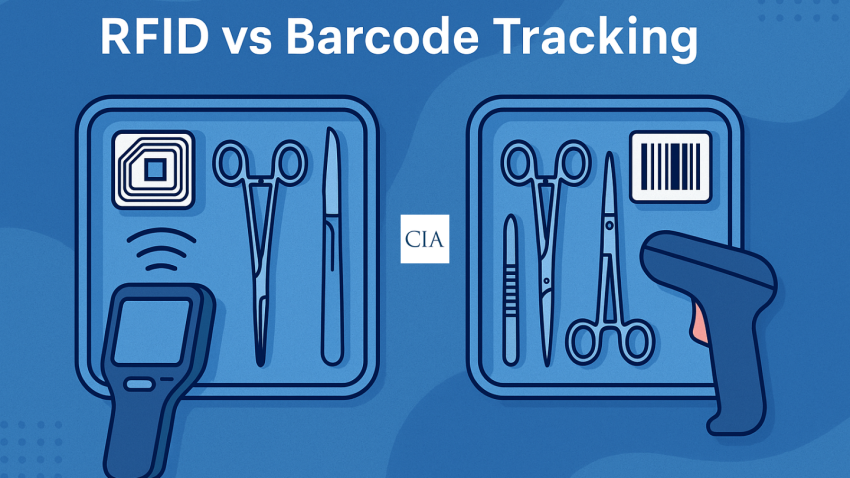
Barcodes are printed labels placed on trays or individual tools. A staff member scans each label using a handheld scanner. The scanner must be close and pointed directly at the barcode. Each item is scanned one at a time.
This method is common because it’s cheap to set up and easy to understand. But it also takes time and can lead to errors if something is missed.
RFID tracking
RFID stands for radio frequency identification. It uses small electronic tags placed on or inside surgical items. A reader picks up the signal from each tag using radio waves. These readers don’t need a direct line of sight. They can scan multiple items at once, even through metal baskets or sterile wrappers.
RFID is faster and more accurate, but it costs more to install and takes longer to get started.
Speed makes a big difference
In most hospitals, hundreds of surgical trays move through central processing every day. Each tray must be checked, counted, cleaned, packed, and sterilized before it returns to the operating room.
With barcodes, this process is slow. A staff member must scan every single item one by one. It’s easy to miss one, especially when staff are in a hurry.
RFID systems can scan an entire tray in just a few seconds. The reader picks up all the tags at once. No need to touch or handle each tool. This saves minutes per tray. Multiply that by dozens or hundreds of trays per day, and the time saved adds up quickly.
Cost versus return
Barcodes: low startup, higher labor
Barcode systems cost very little to begin. A printer and scanner may be all you need. But the hidden cost comes in the form of time. Because scanning is slow, hospitals need more staff to keep up. Mistakes also happen more often, which can lead to delays or tray rework.
RFID: higher startup, lower labor
RFID systems cost more upfront. Tags are more expensive than barcode labels. The readers cost more too. You may need help to install and train staff. But once the system is in place, it saves time every day. Fewer people are needed to handle trays. Scanning is fast, and accuracy is better.
In busy hospitals, RFID systems usually pay for themselves within the first year. In smaller settings, it may take longer.
Accuracy and error reduction
Surgical teams depend on clean and complete trays. If a tool is missing or not cleaned properly, it puts the patient at risk.
Barcodes are easy to miss during fast scans. It’s possible to skip a label, or scan the wrong one.
RFID makes fewer mistakes. It scans everything in the tray, whether it’s buried under others or wrapped in cloth. The system doesn’t rely on line-of-sight. This means better tracking and less rework.
Impact on staff
Barcode scanning can slow teams down. It often feels like extra work. When staff are under pressure, accuracy drops and morale suffers.
RFID removes some of that burden. Scanning is automatic and fast. Staff can focus on more important tasks. There’s less stress and fewer delays.
When barcode still works best
Barcodes still make sense in smaller clinics or outpatient centers with fewer trays. If you only process a few sets per day, the cost of RFID might not be worth it. For simple inventory tasks or labeling external packaging, barcodes remain a solid choice.
RFID vs barcode – Which system pays off faster?
If your facility processes a large volume of surgical sets each day, RFID is the clear winner in terms of speed, accuracy, and labor savings. Even though it costs more to install, the return comes quickly.
If your daily volume is low or your budget is tight, barcodes may still be the better fit for now. But as demands grow, switching to RFID becomes more attractive.
The bottom line for decision-makers
Choosing between RFID and barcodes depends on your workflow, your volume, and your goals. If you want to reduce staff time, cut down on tray errors, and speed up processing, RFID pays off faster. If you want a simple, low-cost system that works well for smaller volumes, barcodes still have a place.
The right choice isn’t just about cost. It’s about what helps your team do their job better with less effort. When time and accuracy matter, speed becomes the savings.

